ID30 turns five: the road so far, and our vision for the future
Five years ago, ID30 was born. It started with one idea: a government should understand its own identity system as well as the company that sells it. Five years later, that idea has taken us from Lomé to Abuja, from Port Moresby to Apia. Here is the story so far, the people who trusted us first, and where we go next.
Why it started
Before ID30, I spent more than twenty years on the other side of the table, in the private sector. I delivered passports, national ID cards and border systems for governments in Latin America, Africa and Asia. I learned how these systems are built. And again and again, I saw the same imbalance.
A government signs a hundred million dollar identity programme with a supplier who has run fifty of them. The government has run one.
ID30 was created to change that. A small, independent firm that sells no technology, represents no vendor, and sits on the side of the state. Our promise has not moved since day one: sovereign decisions, specifications that hold, contracts that can be enforced, and national teams that carry on without us.
The first ones to trust us
A new firm has no track record. Someone has to say yes first.
For ID30, that yes came from ANID, the National Identification Agency of Togo. From the very first days, ANID hired me as its accompanying adviser, and kept me at its side for three years to build the national identification system on the open source MOSIP platform. Today, Togo has registered more than half of its population for its unique eID. I will always be grateful for that first yes.
The GovStack years
From the very first month, ID30 joined GovStack, the initiative led by ITU with GIZ, Estonia and the Digital Impact Alliance to write open specifications for the building blocks of digital government. I coordinated the Identity Building Block working group, then the Digital Wallet one, with experts from India, Bhutan, Egypt, Estonia and France.
GovStack was our school and our field. It took us to Nairobi in 2023, to train some thirty senior officials from Kenya, Somalia and Djibouti. It took us to Togo, where we drew the national architecture and the public services portal with Togo Digital Agency. It took us to Papua New Guinea, where, with the Department of ICT, we delivered the first version of SevisPass, SevisWallet and SevisPortal in under four months. Then came Senegal, Mauritius and Mauritania.
In the same years, ID30 became a founding member of OSIA, the open standard for identity interoperability, where we lead the civil registration working group. Open standards, open source, no vendor lock in: that became our signature.
The World Bank years
In 2024, a new chapter opened. I joined the World Bank ID4D team as a consultant, and I have given half of my time to it since. It took me to the civil registration offices of the Central African Republic, to stakeholders in Cameroon, to Gabon and to Djibouti, always with the same question: how do we make sure no one is left without a legal identity?
In parallel, ID30 has stood by Madagascar for three years within the PRODIGY programme: strategy, operational plan, and a tender strategy of twelve lots to modernise legal identity and civil registration.
The big missions: ECOWAS and Samoa
2025 brought our largest mandate so far. The ECOWAS Commission chose ID30, with Jones Day, to build the roadmap for the ECOWAS biometric identity card and a common framework for digital identity across twelve member states. I have the honour to serve as team leader. Twelve countries, twelve histories, one shared goal: that a West African can prove who they are, anywhere in the region.
Then, in July 2026, came Samoa. With our partner KVA Consult, we were selected out of twenty bidders to support the Samoa Bureau of Statistics on the National Digital Identification System, funded by the World Bank. Two weeks on the ground for the inception mission, a workplan agreed, and 42 months ahead of us. In Apia I received the Ula Fala, a welcome I will never forget.
From Lomé to Apia: five years ago, we could not have drawn that map.
Where we are today
ID30 enters its sixth year as a firm that knows where it is going. This year our logo changed: the target became a compass, because our role is to guide. We help governments turn a political vision into a roadmap, orchestrate their technical and financial partners, and keep the whole picture in view: technical, legal, institutional.
- 33 countries where we have delivered.
- 9 signed certificates and reference letters, the latest from Togo Digital Agency in August 2026.
- 104 vetted experts in a pool of 136 people, who have worked in 106 countries and speak 22 languages.
- Partners who deliver with us, such as KVA Consult, Jones Day, BearingPoint and Wevioo.
- Funders and principals who trust us: the World Bank, ITU, GIZ, AFD, ECOWAS, UEMOA and the Digital Impact Alliance.
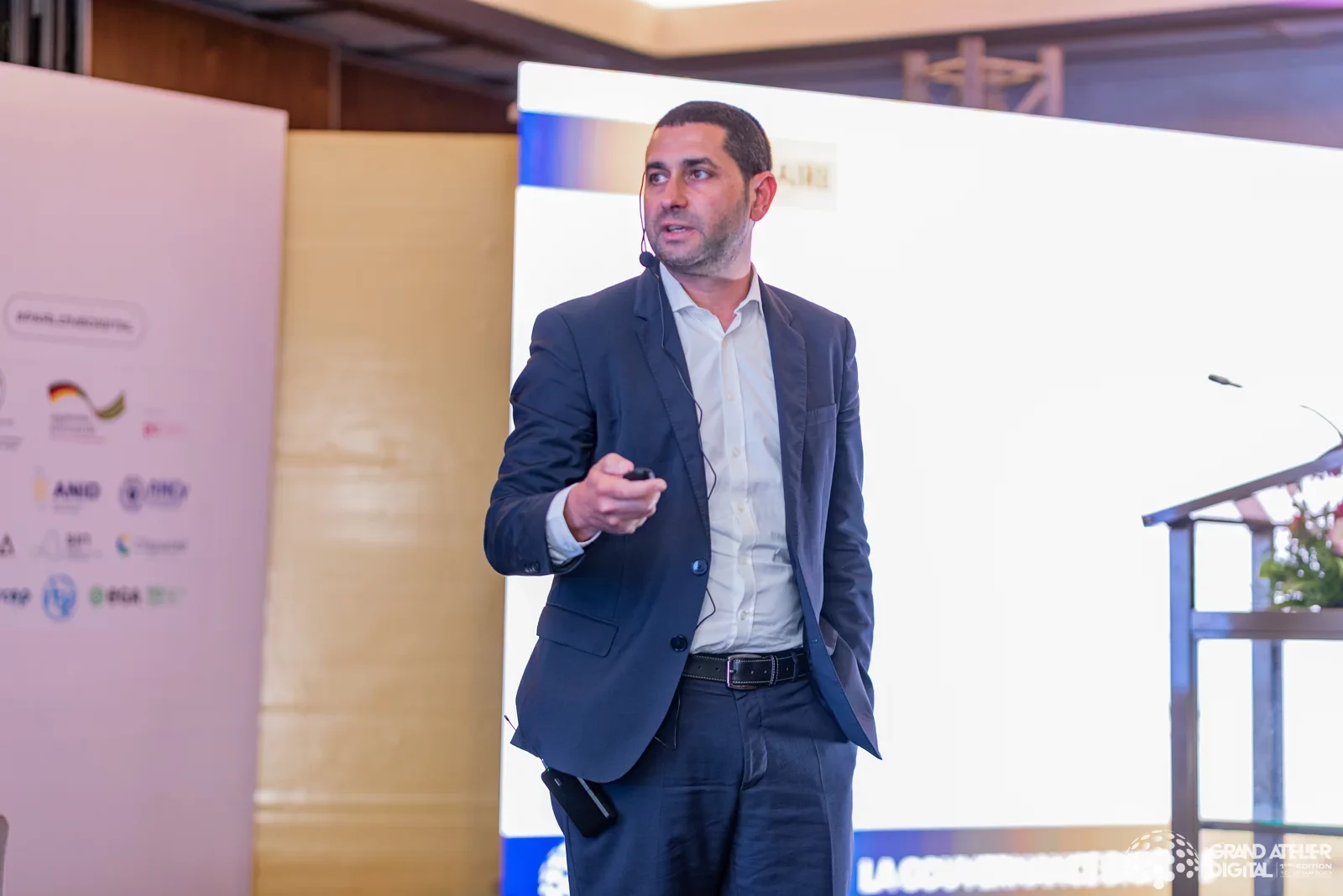
We also renewed our website this spring, with more than a hundred publications shared as a public good, and we wrote our own code of conduct for consultants who work with AI. In May, at ID4Africa 2026 in Abidjan, we moderated the discussion on open source and local ownership. The conversation has moved on: open source has passed the deployment test, and now comes the test of time.
The next five years
Our compass does not change: a legal identity for everyone by 2030, the promise of Sustainable Development Goal 16.9. Here is what we want ID30 to stand for in 2031.
- Sovereignty. Governments that own their systems: their data, their code, their contracts and their teams. We do not sell technology. We make states sovereign over theirs.
- Sustainability. Systems that are still running, financed and improved ten years after the launch, not only on launch day.
- Passing it on. Countries that have gone far, like Togo, sharing their experience with countries that are starting. We want to be the bridge.
- A growing collective. More local experts, trained and supported by ID30, in Africa, in the Pacific, in Asia and in Latin America. International expertise, local delivery.
- From identity to services. Identity is only a tool. What matters is the service it opens: a health record, a cash transfer, a school place, a bank account.
Thank you
To the governments who opened their doors to us. To the partners who chose to bid and deliver with us. To the ID30 experts who carry our name on the ground. To the GovStack, OSIA, MOSIP and World Bank communities who made us better. And to those close to me who made room for this adventure.
Five years ago, ID30 was a compass and an intuition. Today it is a team, a method, and a map full of dots. The road ahead is long. That is exactly what we like about it.
Jaume Dubois, founder of ID30
Want to comment, ask a question, or join the discussion? Continue the conversation on LinkedIn.