9 Recommendations for an effective and sustainable digitalization of legal identity in low-setup countries

Slide content
-
9 Recommendations
for an effective and sustainable digitalization of legal identity in countries with infrastructures challenges
Version 1.0
Jaume Dubois, August 2024, updated October 2024
-
Introduction
This document presents key recommendations for the successful and sustainable digitalization of legal identity in low-resources countries.
It draws on the lessons learned during my various field missions and offers concrete solutions to successfully meet the challenges linked to legal identity, adaptable to each national context.
-
Statement
Digitalization of legal identity often encounters difficulties because the CRVS digitalization approach is not holistic enough. It does not leverage digital capabilities and simply transfers paper processes, unchanged, into dematerialized ones.
A paradigm change is needed to ensure sustainable results over time, by leveraging the multiple separated targeted investments.
Governments supported by their technical and financial partners can drive and finance step by step a comprehensive digital CRVS ecosystem on the long term.
-
Key Recommendations
-
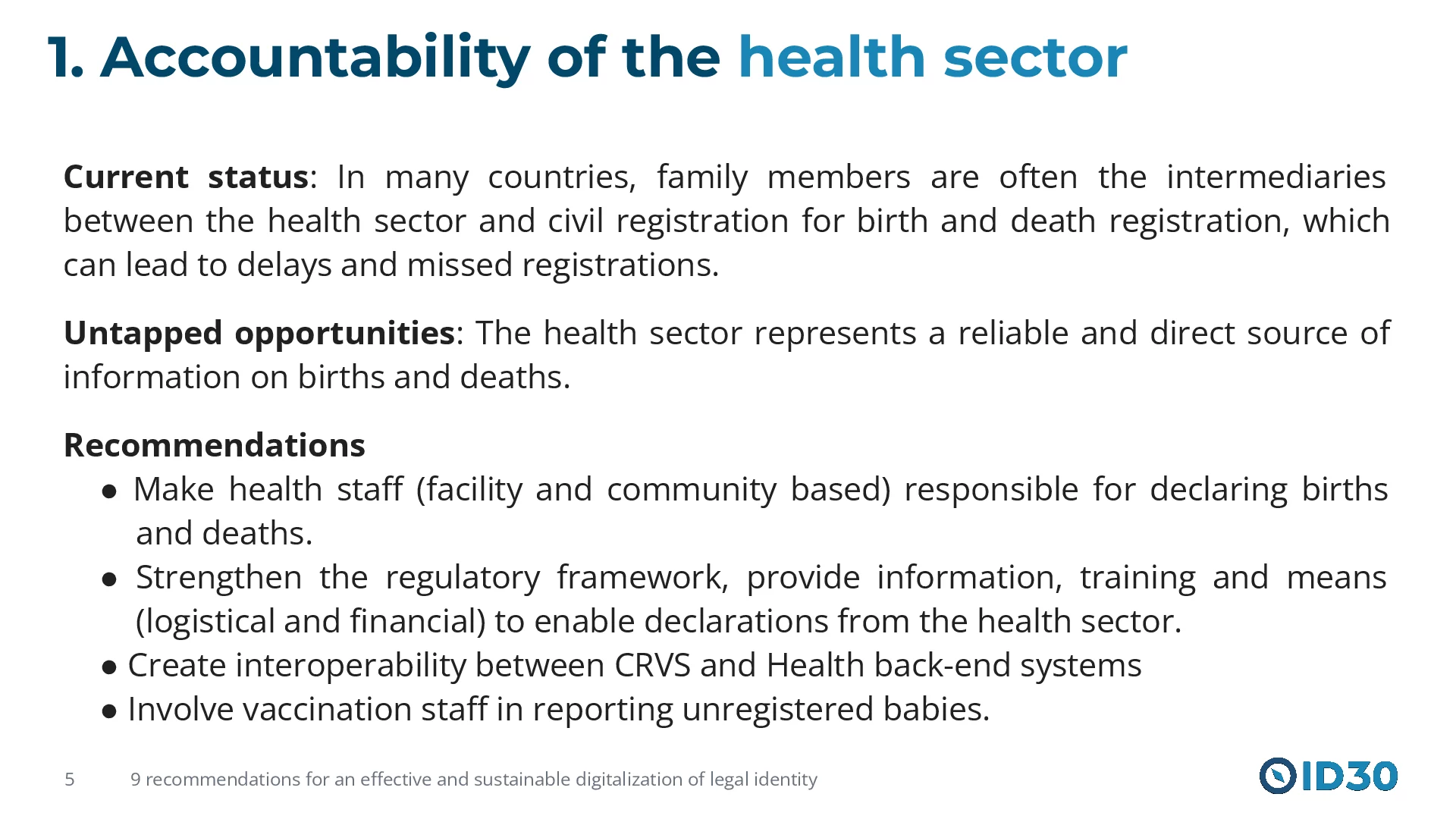
1. Accountability of the health sector
Current status: In many countries, family members are often the intermediaries between the health sector and civil registration forbirthand deathregistration, which can lead to delays andmissed registrations.
Untapped opportunities: The health sector represents a reliable and direct source ofinformation on births and deaths.
Recommendations
● Make health staff (facility and community based) responsible for declaring births and deaths.
● Strengthen the regulatory framework, provide information, training and means (logistical and financial) to enable declarations from the health sector.
● Create interoperability between CRVS and Health back-end systems
● Involve vaccination staff in reporting unregistered babies.
-
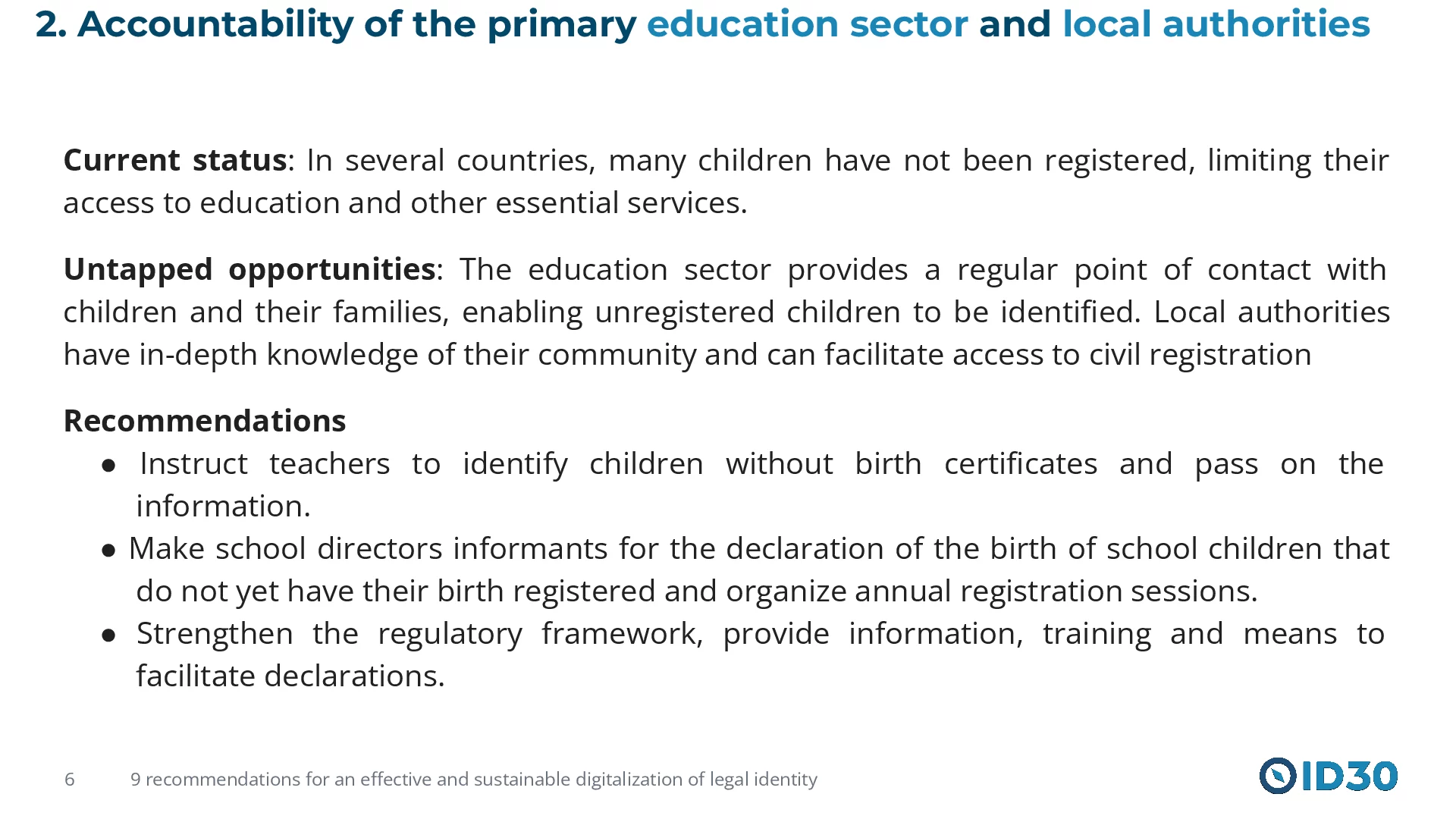
2. Accountability of the primary education sector and local authorities
Current status: In several countries, many children have not been registered, limiting their access to education and other essential services.
Untapped opportunities: The education sector provides a regular point of contact with children and their families, enabling unregistered children to be identified. Local authorities have in-depth knowledge of their community and can facilitate access to civil registration
Recommendations
● Instruct teachers to identify children without birth certificates and pass on the information.
● Make school directors informants for the declaration of the birth of school children that do not yet have their birth registered and organize annual registration sessions.
● Strengthen the regulatory framework, provide information, training and means to facilitate declarations.
-
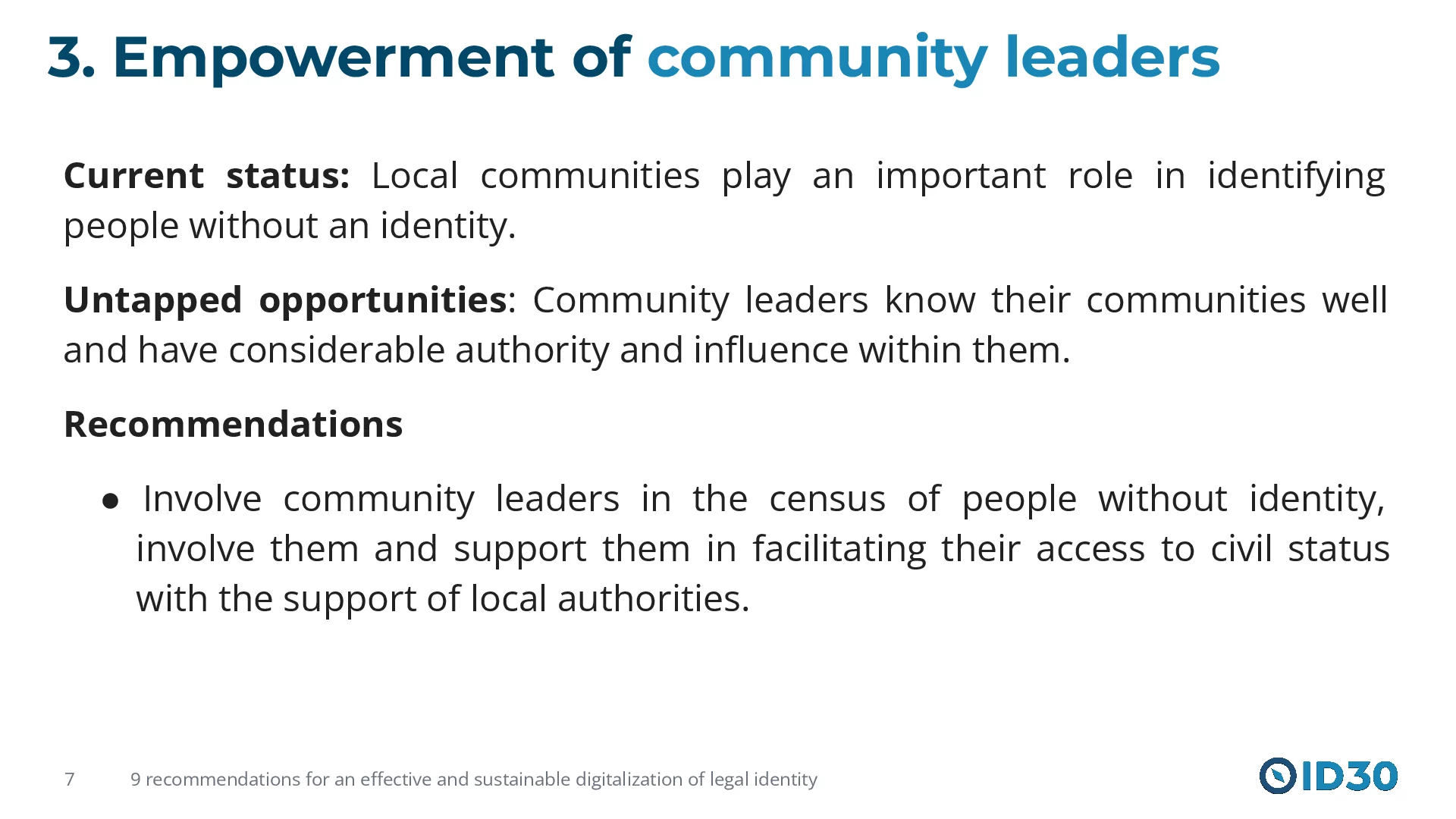
3. Empowerment of community leaders
Current status:Local communities play an important role in identifying people without an identity.
Untapped opportunities:Community leaders know their communities well and have considerable authority and influence within them.
Recommendations
● Involve community leaders in the census of people without identity, involve them and support them in facilitating their access to civil status with the support of local authorities.
-
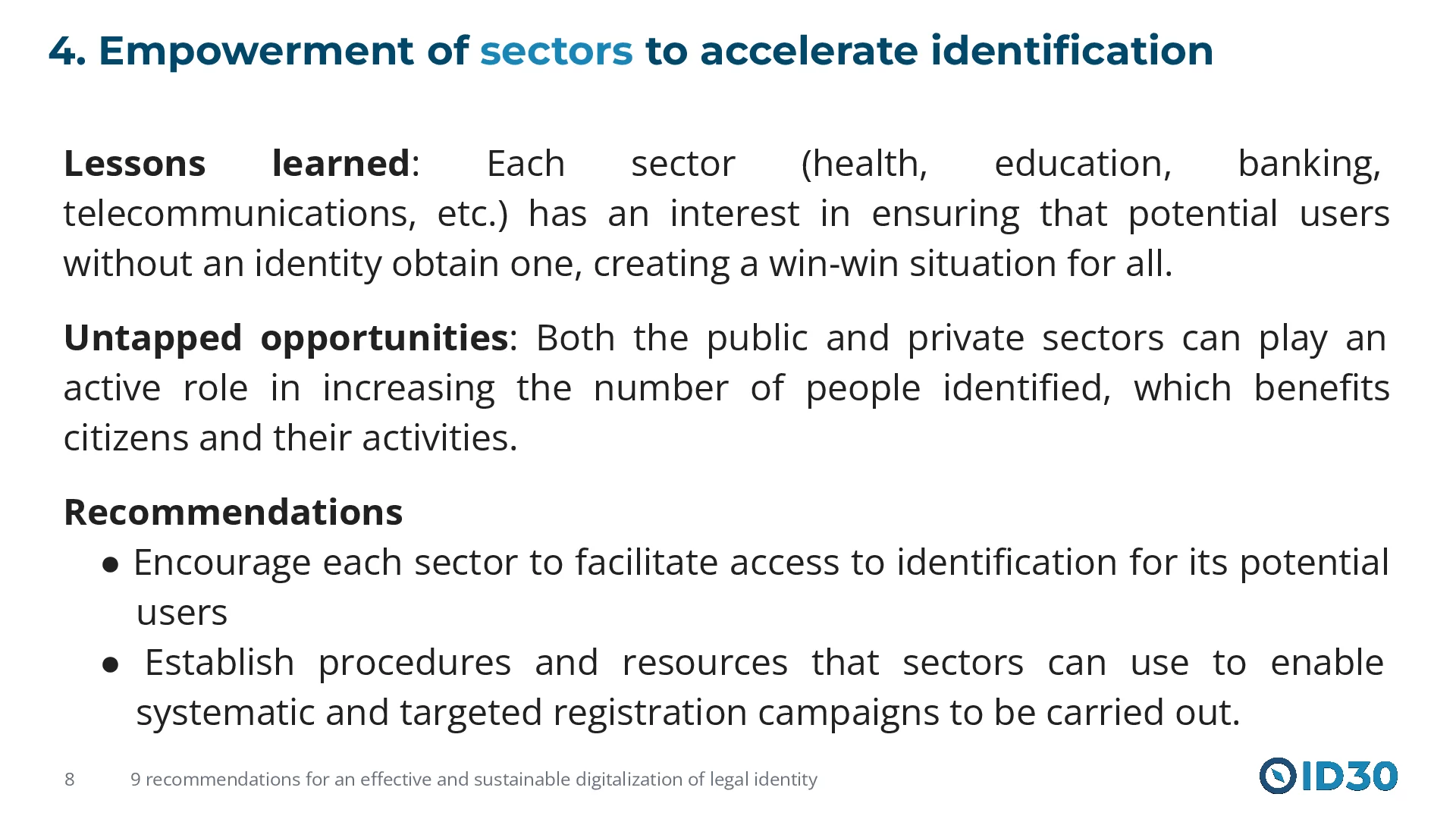
4. Empowerment of sectorsto accelerate identification
Lessons learned: Each sector (health, education, banking, telecommunications, etc.) has an interest in ensuring that potential users without an identity obtain one, creating a win-win situation for all.
Untapped opportunities: Both the public and private sectors can play an active role in increasing the number of people identified,which benefits citizensand their activities.
Recommendations
● Encourage each sector to facilitate access to identification for its potential users
● Establish procedures and resources that sectors can use to enable systematic and targeted registration campaigns to be carried out.
-
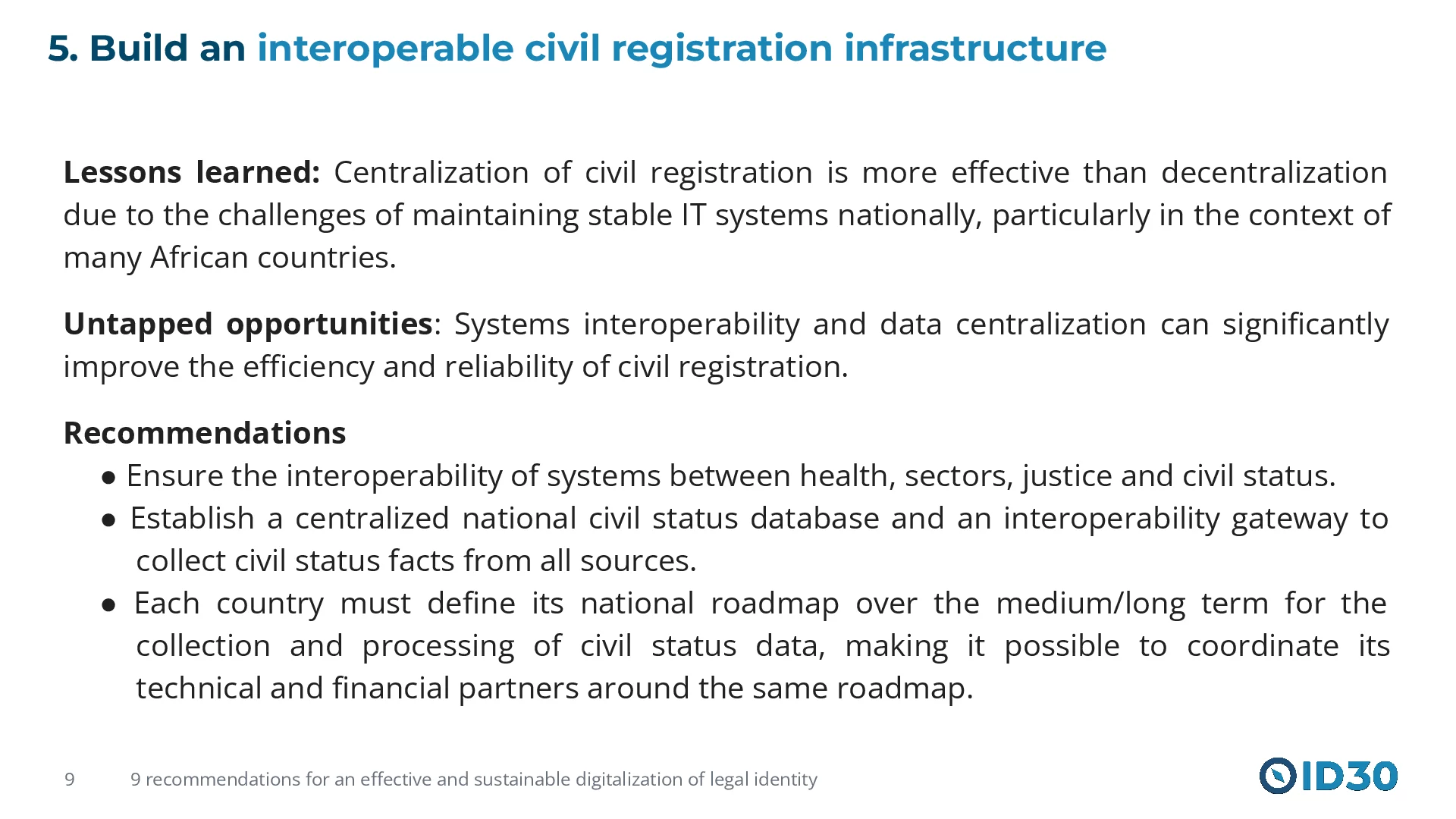
5. Build an interoperable civil registration infrastructure
Lessons learned:Centralization of civil registration is more effective than decentralization due to the challenges of maintaining stable IT systems nationally, particularly in the context of many African countries.
Untapped opportunities: Systems interoperability and data centralization can significantly improve the efficiency and reliability of civil registration.
Recommendations
● Ensure the interoperability of systems between health, sectors, justice and civil status.
● Establish a centralized national civil status database and an interoperability gateway to collect civil status facts from all sources.
● Each country must define its national roadmap over the medium/long term for the collection and processing of civil status data, making it possible to coordinate its technical and financial partners around the same roadmap.
-
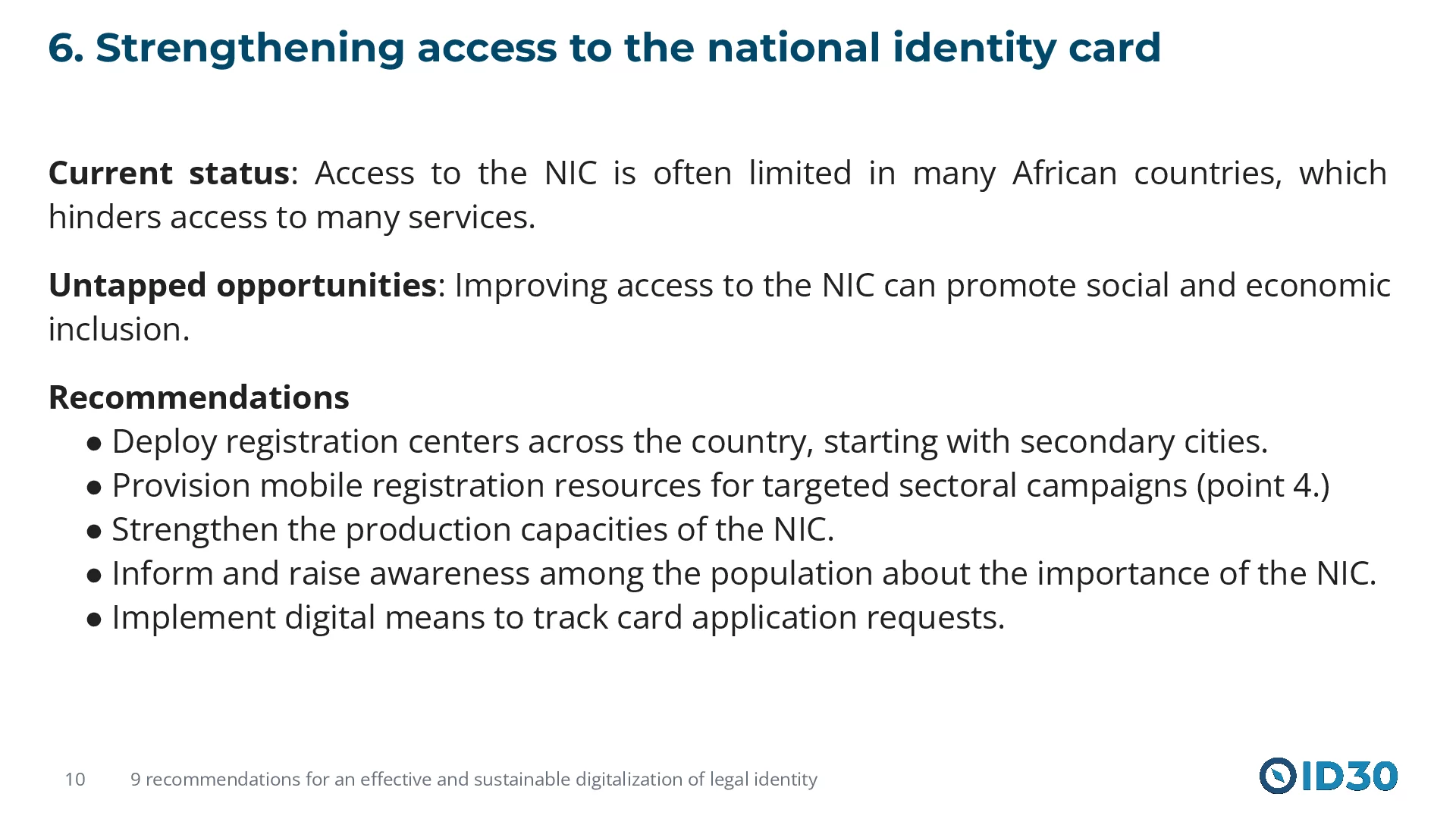
6. Strengthening access to the national identity card
Current status: Access to the NIC is often limited in many African countries, which hinders access to many services.
Untapped opportunities: Improving access to the NIC can promote social and economic inclusion.
Recommendations
● Deploy registration centers across the country, starting with secondary cities.
● Provision mobile registration resources for targeted sectoral campaigns (point 4.)
● Strengthen the production capacities of the NIC.
● Inform and raise awareness among the population about the importance of the NIC.
● Implement digital means to track card application requests.
-
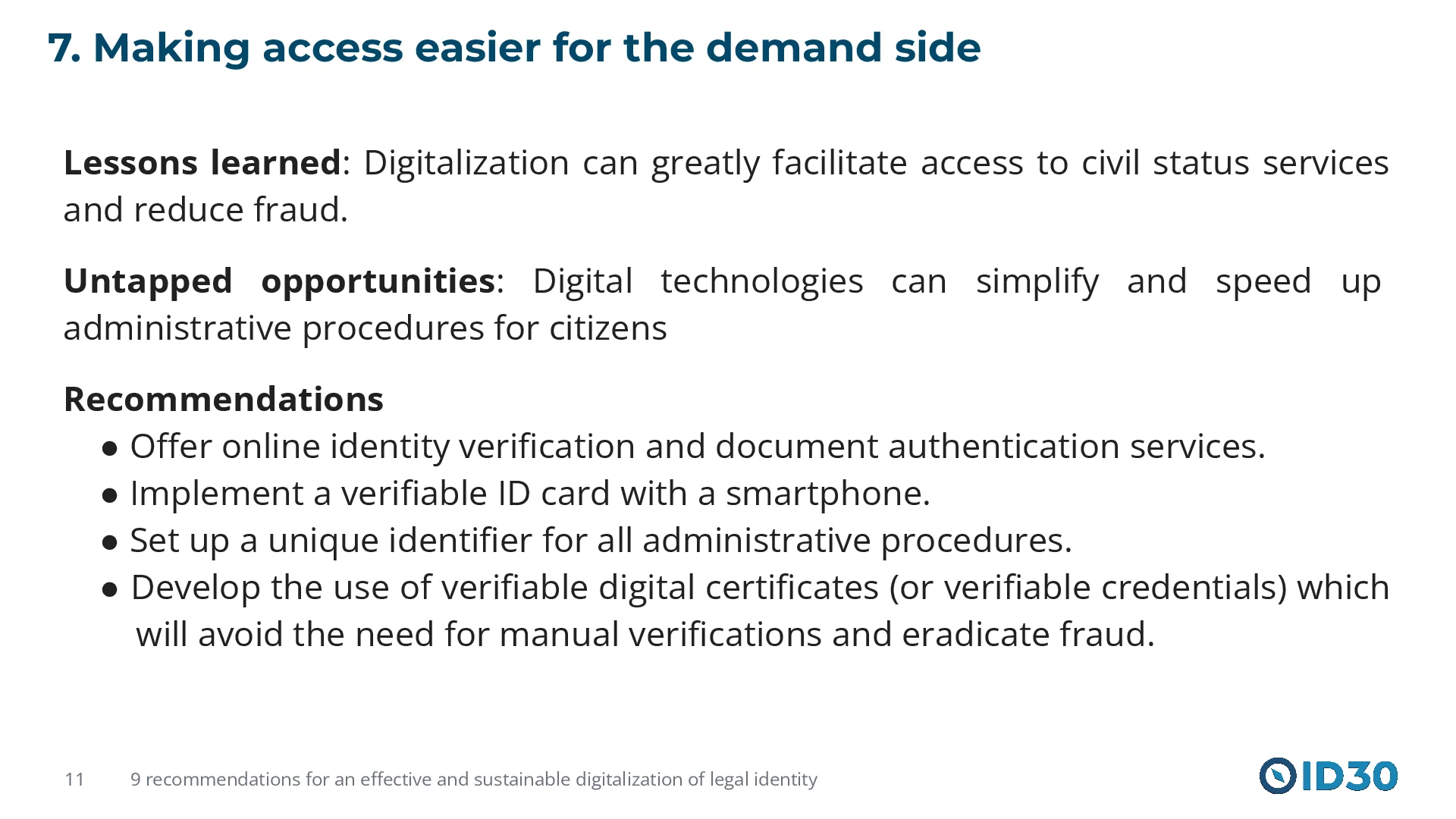
7. Making access easier for the demand side
Lessons learned: Digitalization can greatly facilitate access to civil status services and reduce fraud.
Untapped opportunities: Digital technologies can simplify and speed up administrative procedures for citizens
Recommendations
● Offer online identity verification and document authentication services.
● Implement a verifiable ID card with a smartphone.
● Set up a unique identifier for all administrative procedures.
● Develop the use of verifiable digital certificates (or verifiable credentials) which will avoid the need for manual verifications and eradicate fraud.
-
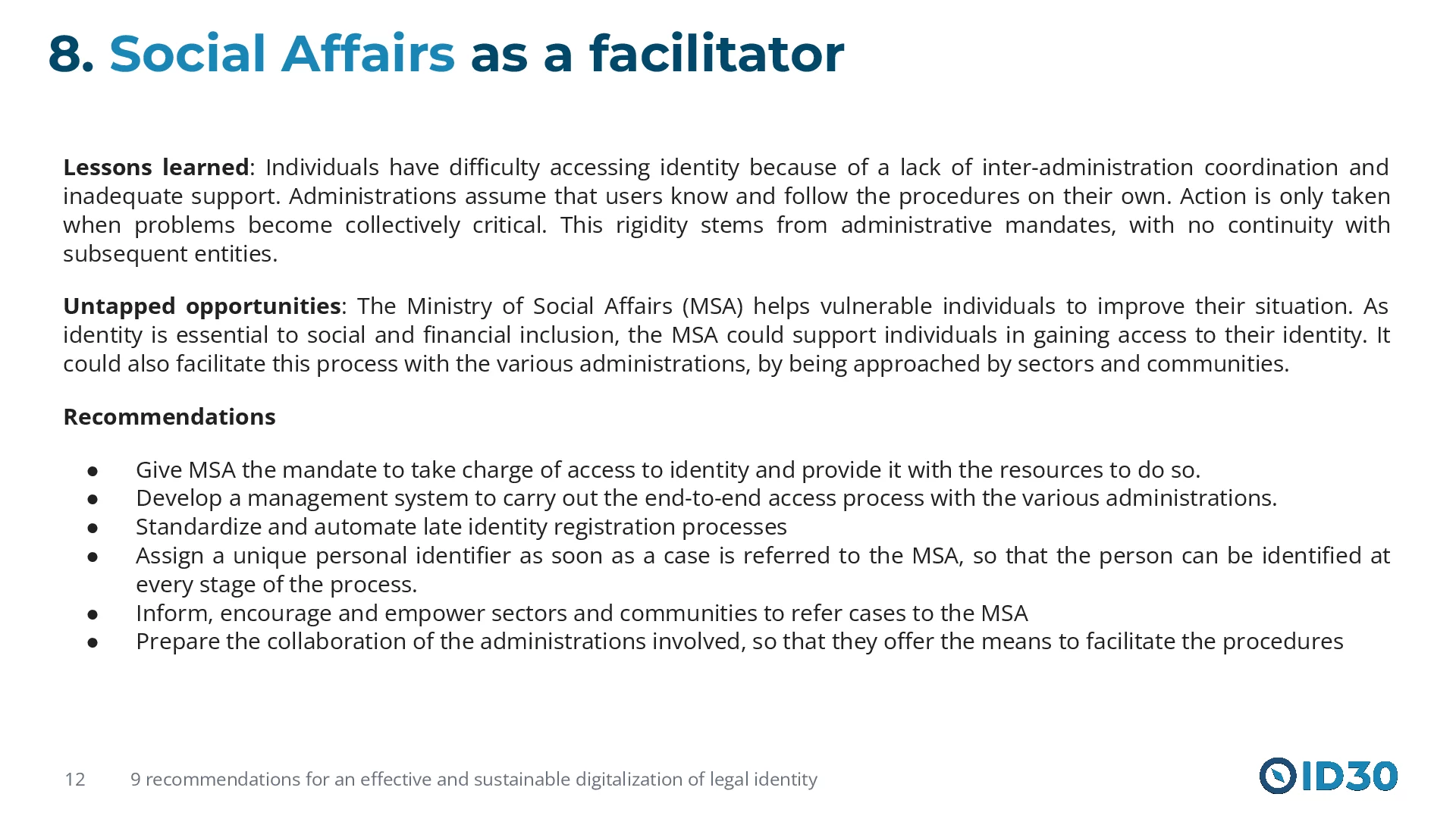
8. Social Affairs as a facilitator
Lessons learned: Individuals have difficulty accessing identity because of a lack of inter-administration coordination and inadequate support. Administrations assume that users know and follow the procedures on their own. Action is only taken when problems becomecollectivelycritical. This rigidity stems from administrative mandates, with no continuity with subsequent entities.
Untapped opportunities: The Ministry of Social Affairs (MSA) helps vulnerable individuals to improve their situation. As identity is essential to social and financial inclusion, the MSA could support individuals in gaining access to their identity. It could also facilitate this process with the various administrations, by beingapproached by sectorsand communities.
Recommendations
-
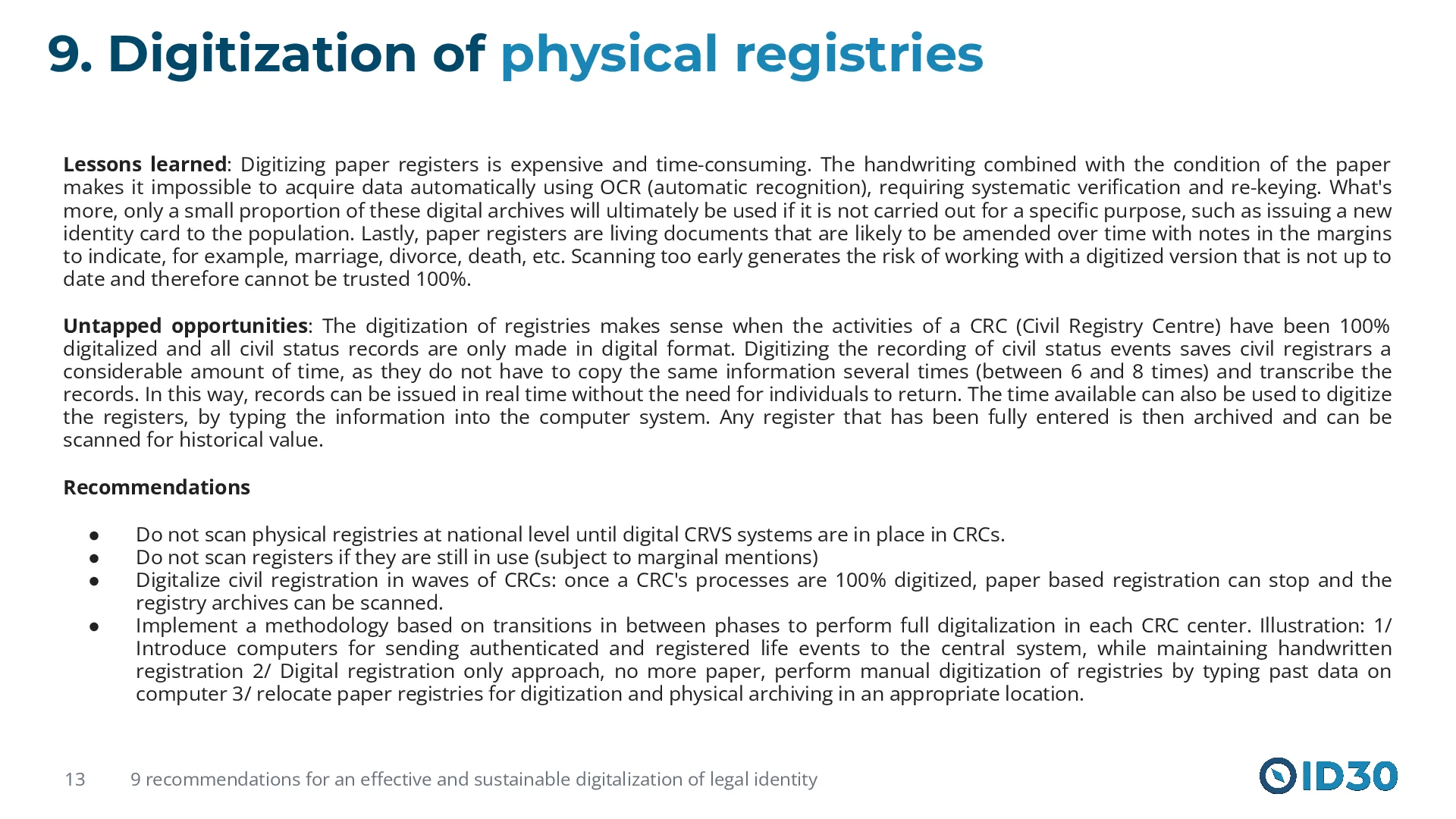
9. Digitization of physical registries
Lessons learned: Digitizing paper registers is expensive and time-consuming. The handwriting combined with the condition of the paper makes it impossible to acquire data automatically using OCR (automatic recognition), requiring systematic verification and re-keying. What's more, only a small proportion of these digital archives will ultimately be usedif it is not carried out for a specific purpose, such as issuing a new identity card to the population.Lastly, paper registers are living documents that are likely to be amendedover time with notes in the margins to indicate, for example, marriage, divorce, death, etc. Scanning too early generates the risk of working with a digitized version that is not up to date and therefore cannot be trusted 100%.
Untapped opportunities: The digitization ofregistriesmakes sense when the activities of a CRC (Civil Registry Centre) have been 100% digitalized and all civil status records are only made in digital format. Digitizing the recording of civil status events saves civil registrars a considerable amount of time, as they do not have to copy the same information several times (between 6 and 8 times) and transcribe the records. In this way, records can be issued in real time without the need for individuals to return. The time available can also be used todigitizethe registers, by typing the information into the computer system. Any register that has been fully entered is then archived and can be scanned for historical value.
Recommendations
-
Implementing
-
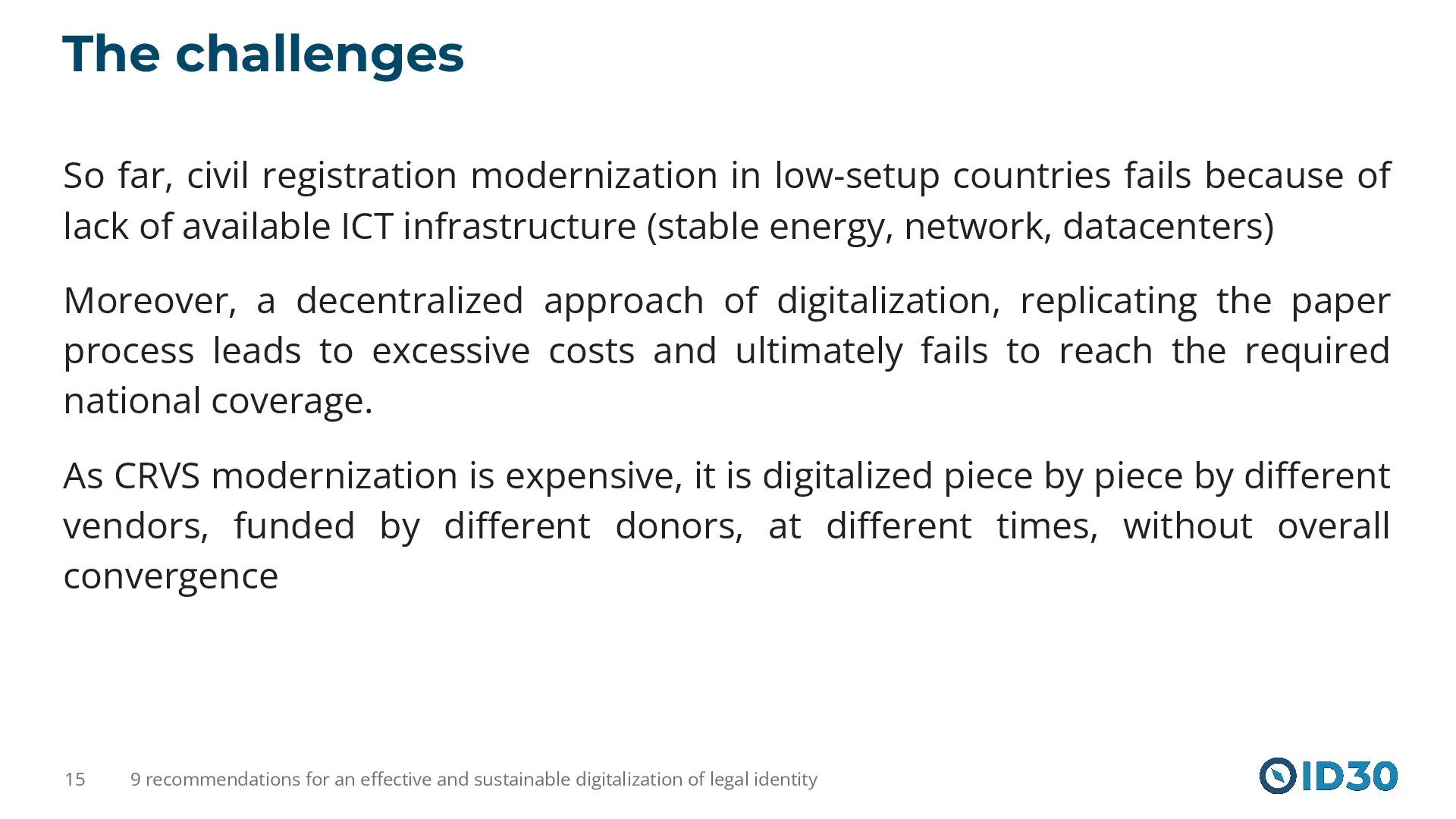
The challenges
So far, civil registration modernization in low-setup countries fails because of lack of available ICT infrastructure (stable energy, network, datacenters)
Moreover, a decentralized approach of digitalization, replicating the paper process leads to excessive costs and ultimately fails to reach the required national coverage.
As CRVS modernization is expensive, it is digitalized piece by piece by different vendors, funded by different donors, at different times, without overall convergence
-
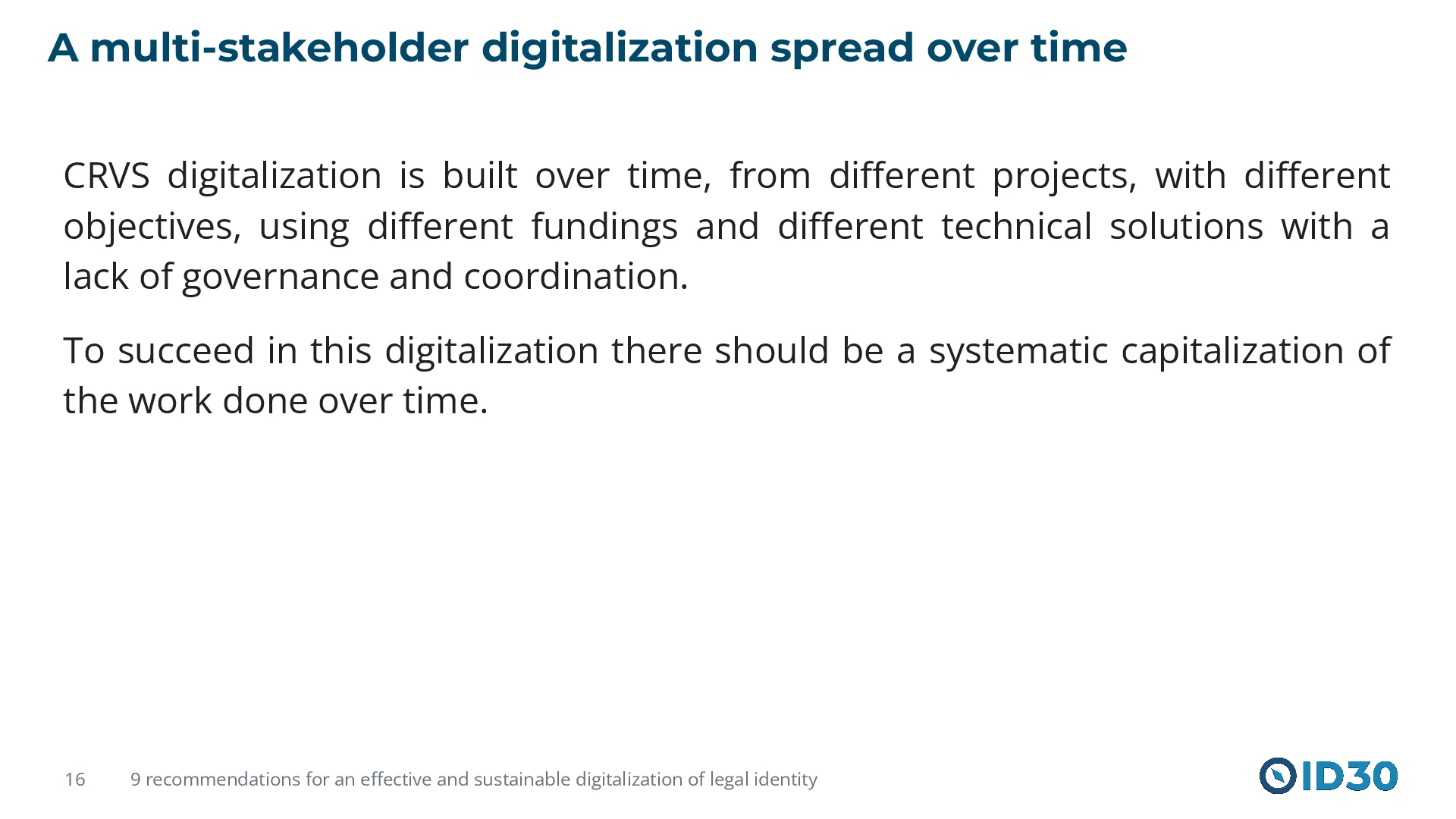
A multi-stakeholder digitalization spread over time
CRVS digitalization is built over time, from different projects, with different objectives, using different fundings and different technical solutions with a lack of governance and coordination.
To succeed in this digitalization there should be a systematic capitalization of the work done over time.
-
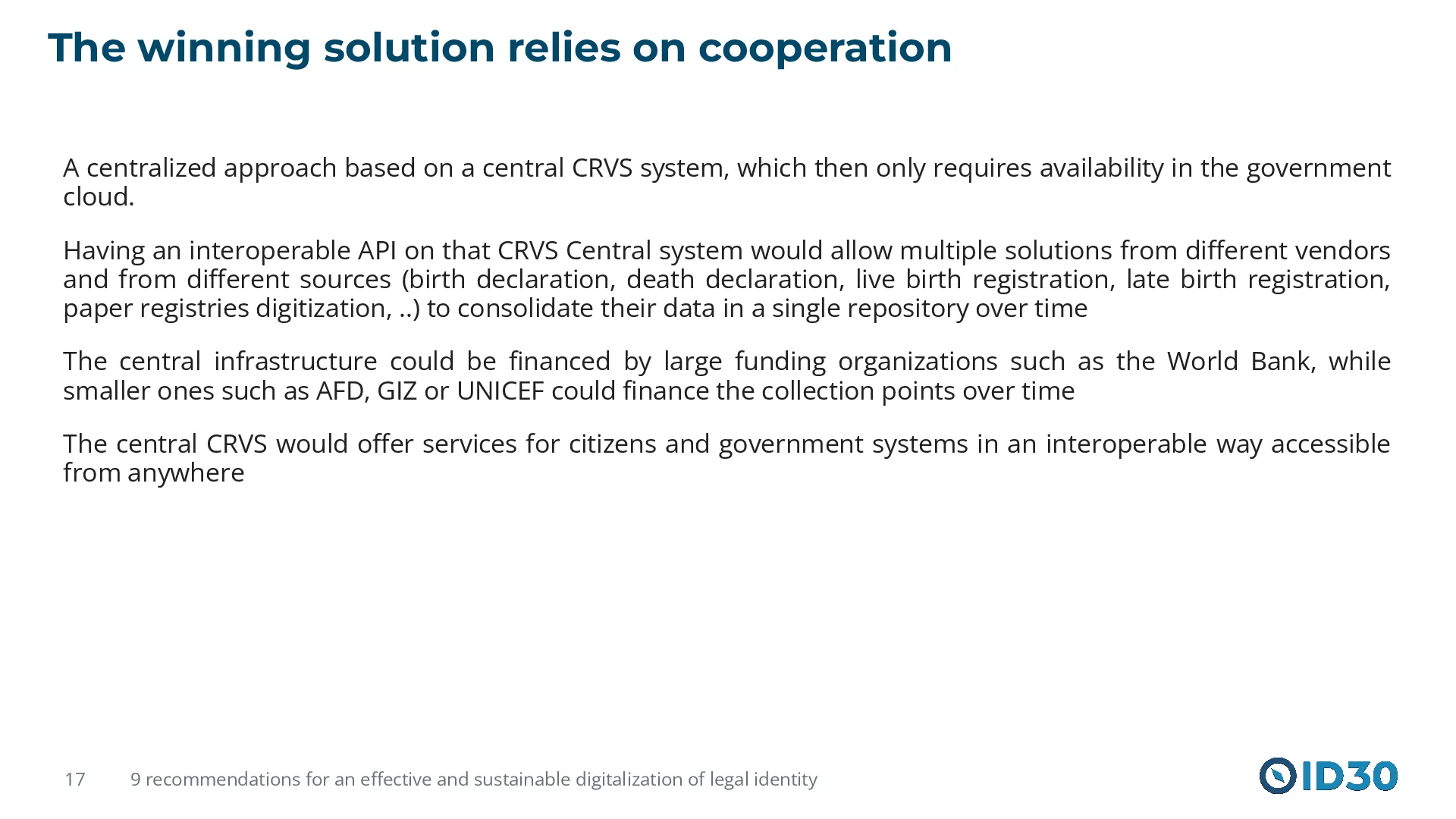
The winning solution relies on cooperation
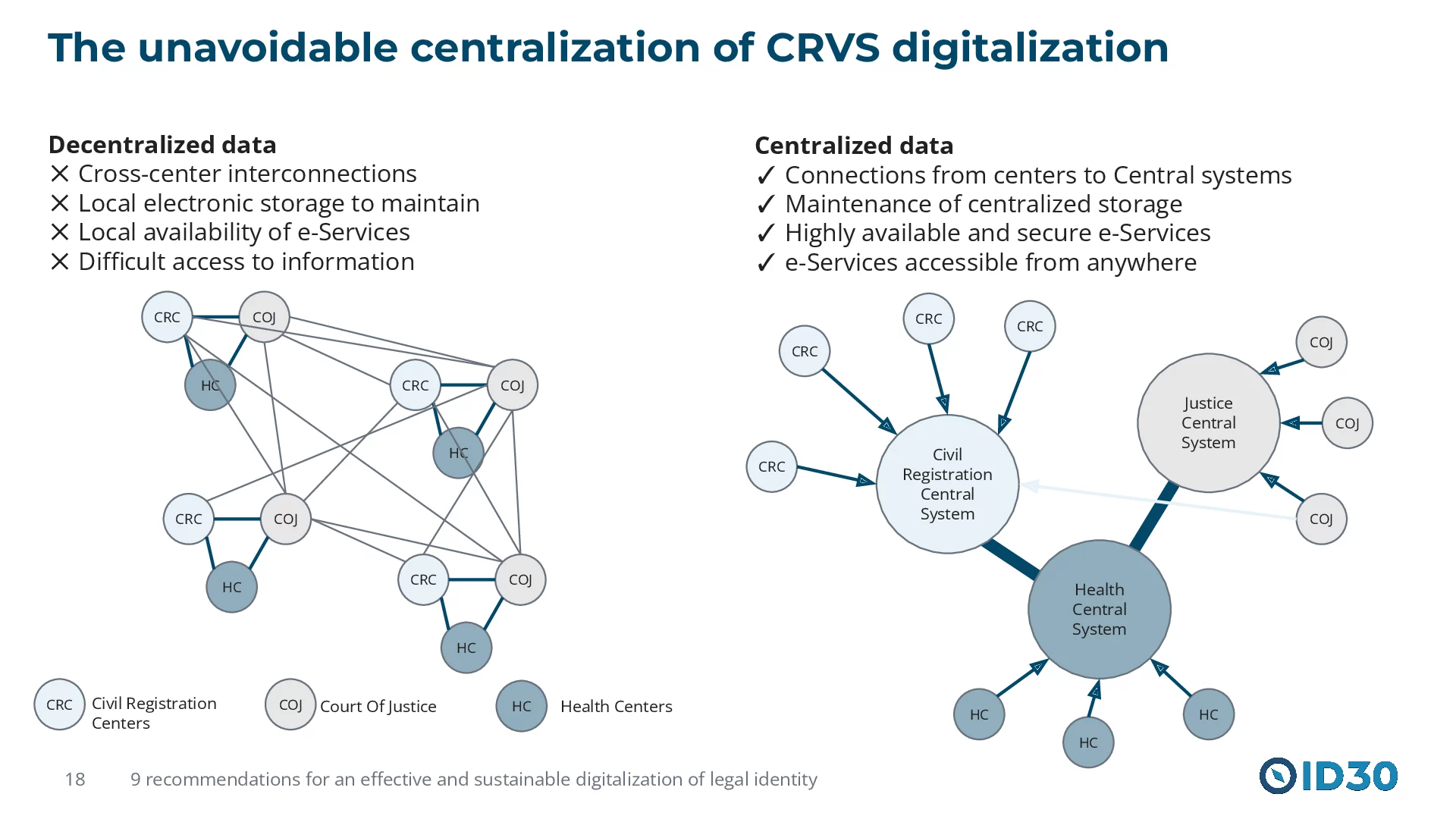
A centralized approach based on a central CRVS system, which then only requires availability in the government cloud.
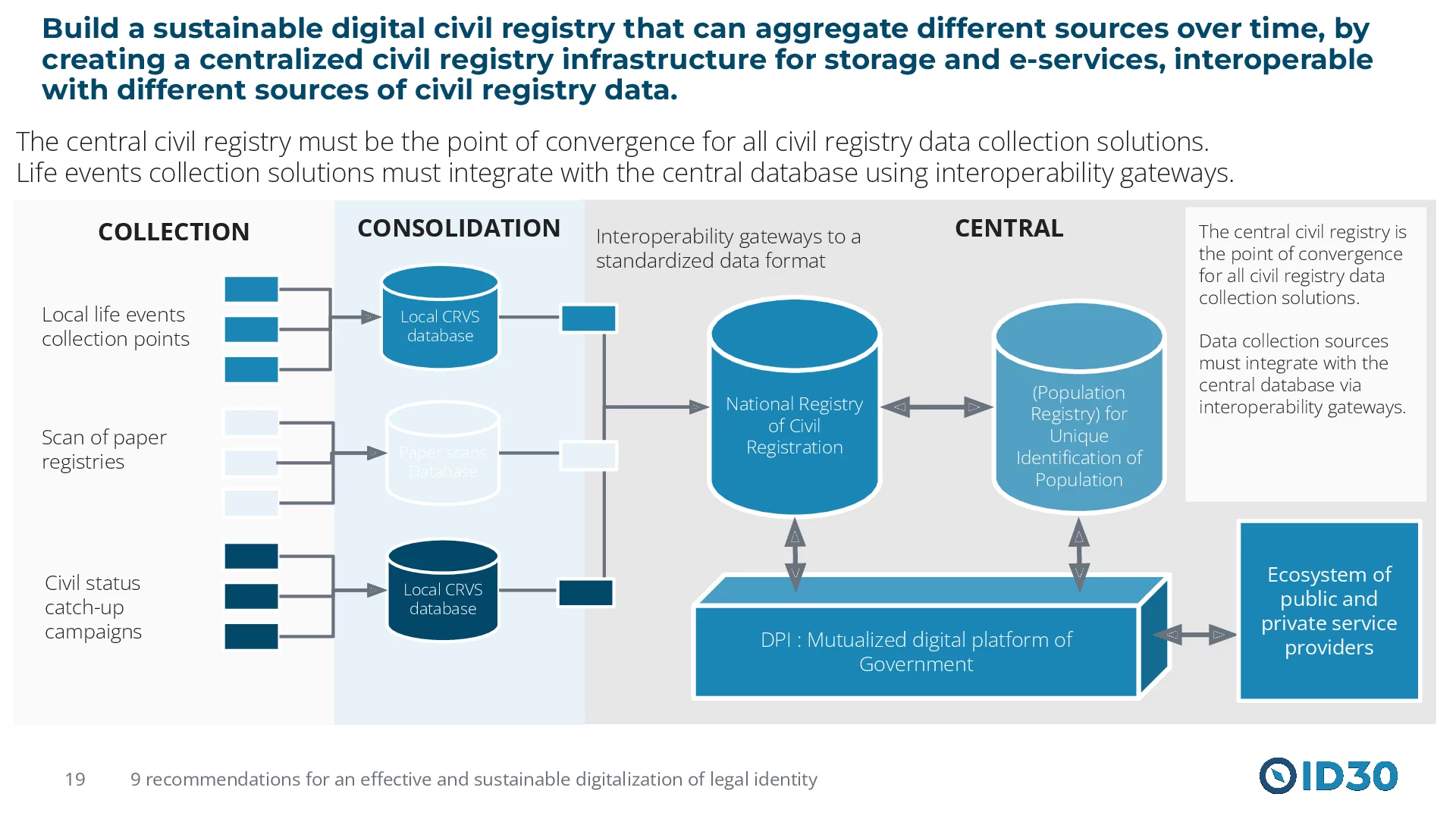
Having an interoperable API on that CRVS Central system would allow multiple solutions from different vendors and from different sources (birth declaration, death declaration, live birth registration, late birth registration, paper registries digitization, ..) to consolidate their data in a single repository over time
The central infrastructure could be financed by large funding organizations such as the World Bank, while smaller ones such as AFD, GIZ or UNICEF could finance the collection points over time
The central CRVS would offer services for citizens and government systems in an interoperable way accessible from anywhere
-
The unavoidable centralization of CRVS digitalization
Decentralized data
✕ Cross-center interconnections
✕ Local electronic storage to maintain
✕ Local availability of e-Services
✕ Difficult access to information
Centralized data
✓ Connections from centers to Central systems
✓ Maintenance of centralized storage
✓ Highly available and secure e-Services
✓ e-Services accessible from anywhere
CRC
COJ
CRC
CRC
COJ
CRC
HC
CRC
COJ
Justice Central System
COJ
HC
Civil Registration Central System
CRC
CRC
COJ
COJ
HC
CRC
COJ
Health Central System
HC
CRC
COJ
HC
Civil Registration Centers
Court Of Justice
Health Centers
HC
HC
HC
-
Build a sustainable digital civil registry that can aggregate different sources over time, by creating a centralized civil registry infrastructure for storage and e-services, interoperable with different sources of civil registry data.
The central civil registry must be the point of convergence for all civil registry data collection solutions.
Life events collection solutions must integrate with the central database using interoperability gateways.
COLLECTION
CONSOLIDATION
CENTRAL
Interoperability gateways to a standardized data format
The central civil registry is the point of convergence for all civil registry data collection solutions.
Data collection sources must integrate with the central database via interoperability gateways.
Local life events collection points
Local CRVS database
National Registry of Civil Registration
(Population Registry) for Unique Identification of Population
Scan of paper registries
Paper scans Database
Ecosystem of public and private service providers
Civil status catch-up campaigns
Local CRVS database
DPI : Mutualized digital platform of Government
-
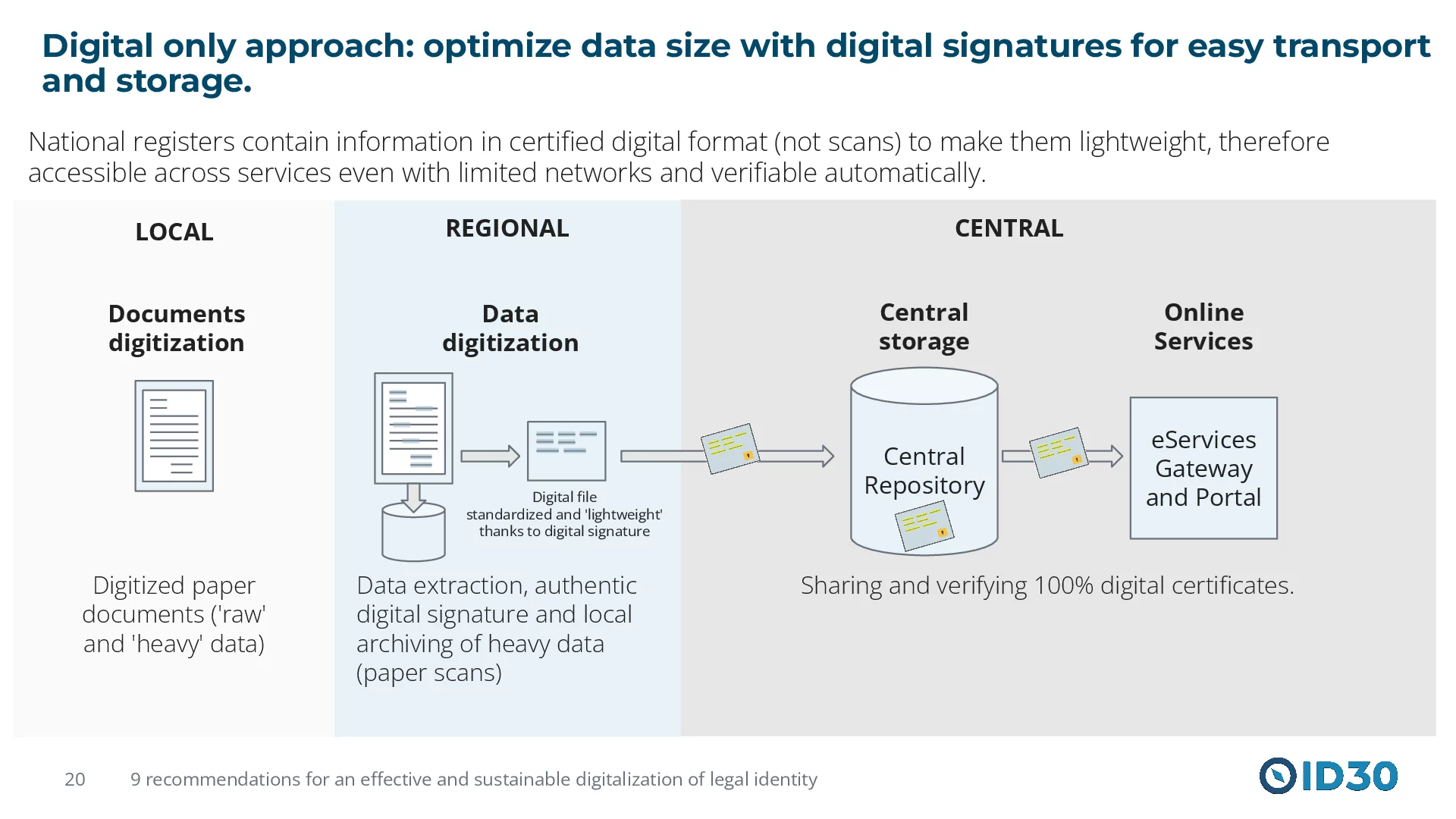
Digital only approach: optimize data size with digital signatures for easy transport and storage.
National registers contain information in certified digital format (not scans) to make them lightweight, therefore accessible across services even with limited networks and verifiable automatically.
LOCAL
REGIONAL
CENTRAL
Documents digitization
Data
digitization
Central storage
Online Services
Central
Repository
eServices Gateway and Portal
Digital file
standardized and 'lightweight'
thanks to digital signature
Digitized paper documents ('raw' and 'heavy' data)
Data extraction, authentic digital signature and local archiving of heavy data (paper scans)
Sharing and verifying 100% digital certificates.
-
▲ DEMAND
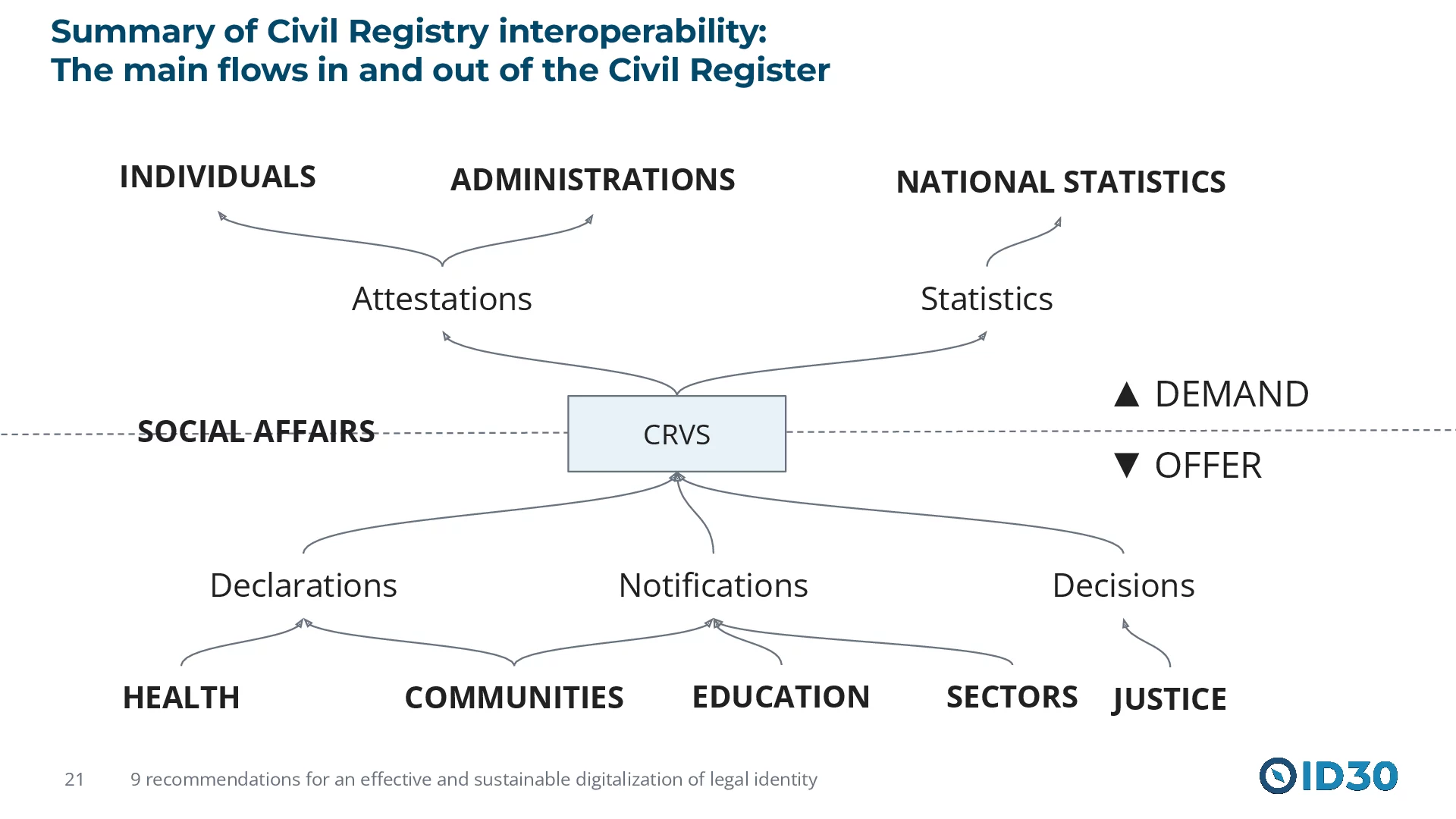
Summary of Civil Registry interoperability:
The main flows in and out of the Civil Register
INDIVIDUALS
ADMINISTRATIONS
NATIONAL STATISTICS
Attestations
Statistics
CRVS
SOCIAL AFFAIRS
▼ OFFER
Declarations
Notifications
Decisions
EDUCATION
SECTORS
HEALTH
COMMUNITIES
JUSTICE
-
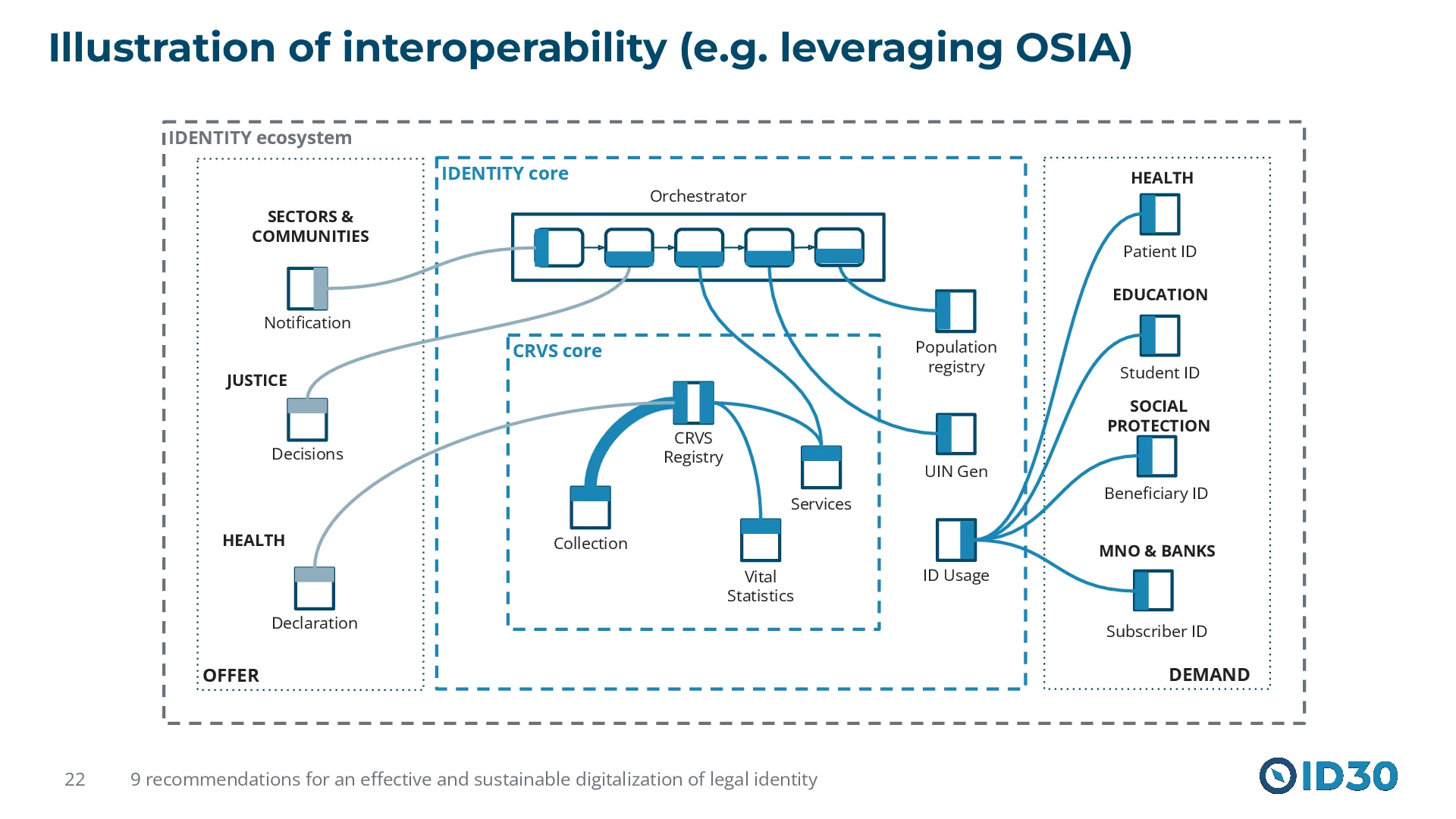
Illustration of interoperability (e.g. leveraging OSIA)
IDENTITY ecosystem
HEALTH
OFFER
IDENTITY core
DEMAND
Orchestrator
SECTORS & COMMUNITIES
Patient ID
EDUCATION
Notification
CRVS core
Population registry
JUSTICE
Student ID
SOCIAL
PROTECTION
CRVS Registry
Decisions
UIN Gen
Beneficiary ID
Services
HEALTH
Collection
MNO & BANKS
Vital Statistics
ID Usage
Declaration
Subscriber ID
-
Conclusion: Towards an operational strategy
Conclusion
These recommendations are generic and must be contextualized by each country in order to define the specific actions as well as the actors to be involved.
Following the diagnosis, the next step for each country is the development of an operational strategy which will detail the implementation phases, change management, and institutional modernization necessary to execute the recommendations.
Call to action
ID30 is looking for partners to advance this approach further, particularly to develop the Interoperability framework in terms of protocols and standards.
Also to help disseminate it in countries, one of the main issues being raising awareness to reduce resistance and drive a sustainable change in the area of Civil Registration.
Si vous souhaitez avoir une présentation ou obtenir une copie de cette présentation, n’hésitez pas à nous contacter nous contacter.